
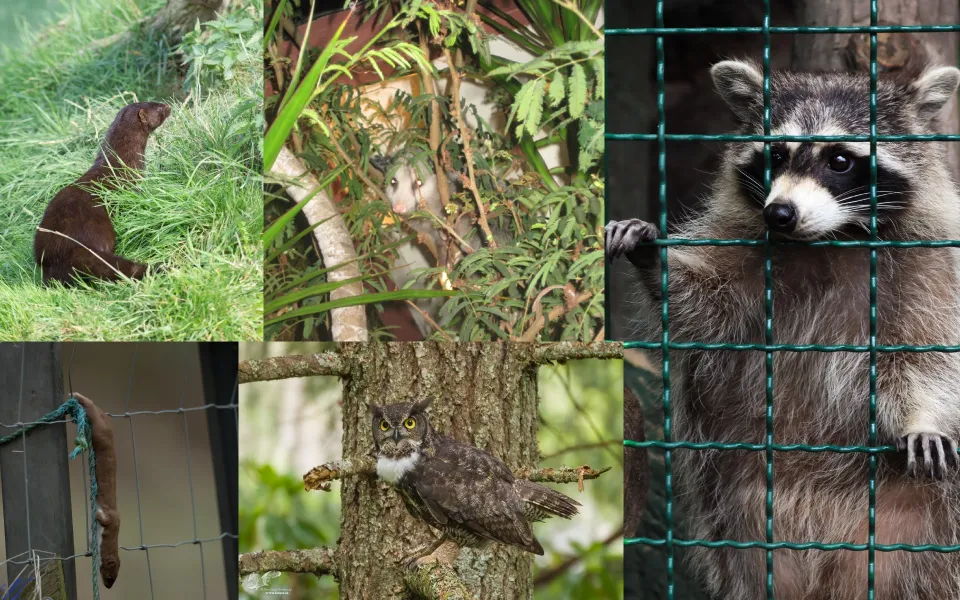
A predator does not need to understand your entire pigeon-loft setup. It only needs to find one weak latch, one loose wire edge, one opening under the floor, or one place where feed keeps drawing it back.
After dealing with wild critters in and around our lofts, I do not treat the nighttime lockup as a small job. A loft can look secure in the daylight and still have a weakness that becomes obvious when everything is quiet.
You cannot promise that no animal will ever test a loft. You can make the loft harder to enter, easier to inspect, and less inviting to return to.
Walk the outside before closing the birds in
Start with one slow lap around the structure. Look from the ground up instead of checking only the door you use every day.
Pay attention to:
- Fresh digging near walls, blocks, skids, or the fly pen
- Bent wire or an edge pulling away from the frame
- Loose trim, roof panels, or vents
- A gap where two different materials meet
- Scattered feed, damaged containers, or unusual tracks
- Droppings, fur, feathers, or nesting material that was not there before
Small changes matter because they tell you something has already been testing the area. The sooner you find the change, the easier it usually is to correct.
The personal stories in Troublesome Critters in and Around Pigeon Lofts show how many different animals can create pressure around birds. This checklist is the practical companion: inspect first, secure the loft, and get qualified local help when an animal is already present.
Check every door and latch with your hand
Do not only look at a latch. Close it and pull on it. Wood can swell, screws can loosen, and a latch that seemed tight last month can stop seating properly.
For every access point, check:
- The latch closes completely
- Hinges and screws are tight
- The door does not lift, flex, or pull away from the frame
- There is no gap along the bottom or corners
- A secondary closure is available where the main latch could be bumped or worked loose
Use hardware that fits the actual door and structure. A complicated lock is not automatically better than a simple one that closes firmly every night.
Remember the smaller access points too. Feed doors, clean-out panels, nest-box access, pop doors, and temporary summer panels all need the same attention as the main entrance.
Inspect wire, corners, and fasteners
Wire and mesh are only as secure as the frame holding them. Run your eyes along every edge, especially where wire meets wood, roofing, another panel, or the ground.
Look for broken welds, rust, enlarged openings, bent corners, staples working loose, or a panel that can be pushed inward. If you can move an edge easily with your hand, an animal may be able to work at it longer than you expect.
Repair openings with materials suited to the location and the pressure the panel may face. Avoid leaving sharp wire ends where a bird, dog, person, or wild animal can be injured.
The guide to perches, nest boxes, and loft flow explains why a useful loft must be easy to clean and observe. The same idea applies outside: if a corner is impossible to see or reach, it is also easy to ignore.
Look under the loft and along the floor
Predator protection is not only a wall-and-roof job. Examine the floor, the area below raised structures, and the full line where the loft meets the ground or support blocks.
Watch for:
- Digging or disturbed soil
- Rot, water damage, or soft wood
- A grate or floor panel shifting out of position
- Droppings or feed falling into a place that attracts animals
- Openings created by snow, frost movement, or settling
If the loft is raised, make sure the area underneath does not become a hidden feeding and nesting space. If the structure is enclosed near the ground, inspect the enclosure after storms and seasonal ground movement.
Our winterizing and summerizing guide covers the seasonal changes a Northern loft goes through. Every seasonal panel or cover should be rechecked when it is installed, removed, or shifted.
Store feed so it does not advertise the loft
Spilled grain can turn a secure-looking loft into a regular stop for rodents and other wildlife. Sweep or pick up spills, close feed containers completely, and do not leave an open bag where an animal can smell and reach it.
Check storage containers for chewing, cracked lids, and moisture. Clean the area around the containers as carefully as the bird feeding area.
A regular loft-cleaning routine helps here because cleaning is also inspection. When feed, bedding, or droppings are allowed to pile up, it becomes harder to see new tracks, damage, or digging.
Make the final bird check part of the lockup
Before leaving for the night, count or visually account for the birds you expect to be inside. Look at how they are sitting. Sudden restlessness, birds crowding away from one wall, or unusual noise can be a reason to inspect the area again.
Then follow the same closing order every night:
- Confirm the birds are in the correct section.
- Remove or secure exposed feed.
- Close pop doors and small access panels.
- Close and test the main doors.
- Walk the exterior once more.
- Check that lights, cords, heaters, or fans are being used safely and are not creating a new opening or hazard.
A repeatable order makes it less likely that one small door or panel will be forgotten.
Northern weather can open yesterday’s repair
Snow, ice, rain, wind, and freeze-thaw movement can change a structure. A panel may pull away, a door may stop closing squarely, or ice may hold a latch partly open.
After heavy weather, do an extra inspection during daylight. Clear only what you can clear safely, and do not make a rushed electrical or structural repair around birds. Damaged wiring, heat equipment, roofing, or load-bearing parts should be handled by someone qualified for that work.
Keep the loft dry and ventilated, but do not create an unprotected opening in the name of airflow. A screened or covered vent still needs to be checked for damage and blockage.
If an animal is already present, protect the birds and get local guidance
Wildlife rules and safe response methods vary by location and species. Do not assume that trapping, relocating, poisoning, or killing an animal is legal or safe. Those actions can also expose birds, pets, children, and other wildlife to more danger.
Move the pigeons away from immediate danger when that can be done safely, block access only if you are certain an animal is not being sealed inside, and contact a qualified local wildlife-control professional or the appropriate local authority.
Hawks create a different kind of pressure because it happens while the birds are outside. Review hawk awareness when flying pigeons before a kit goes up. A secure loft protects birds at rest; a sky check helps you make a better flying decision.
The best check is the one you repeat
No single repair replaces a regular inspection. Make the nightly lockup quick enough to repeat and thorough enough to catch a change.
Doors. Latches. Wire. Floor. Feed. Birds. One slow lap around the outside.
That routine cannot control every wild animal in a Northern yard, but it can keep a small weakness from becoming an open invitation.
Until next time … enjoy the backyard fun.