
Bathing is one of the simple parts of pigeon care that birds usually handle quite well on their own. Give them a clean, stable pan with plain water and enough time, and the birds will show you whether they are interested.
I have watched pigeons splash, sit, preen, and enjoy the water in every warm season we get here in Minnesota. Bathing helps loosen dust and dander from the feathers, and it gives me another chance to watch how each bird is acting.
The routine does not need a cabinet full of additives. Clean water, a clean pan, safe weather, and steady observation are the baseline.
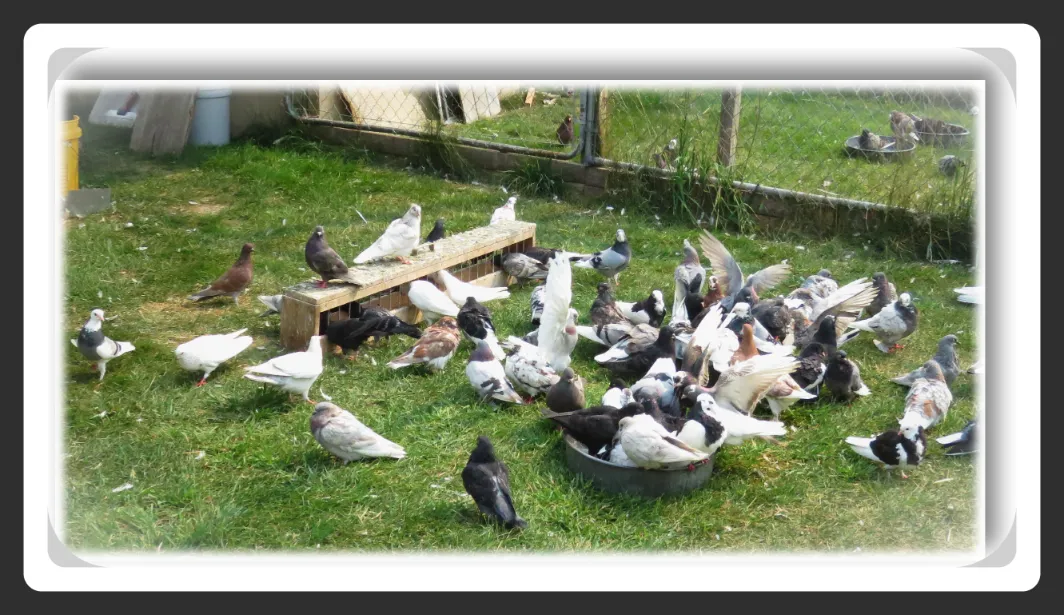
Why roller pigeons bathe
Pigeons preen and maintain their own feathers, but bathing gives them a way to loosen surface dust, dander, and light debris. This is especially noticeable during molt, when feather material and dust can build up around the loft.
A bath also gives birds a way to cool themselves in suitable warm weather. That does not mean a pan of water solves overheating, poor ventilation, or a loft that has become too hot. Shade, airflow, clean drinking water, space, and the condition of the birds still matter.
Bathing is part of normal care, not a treatment for mites, internal parasites, infection, or another health problem.
Use a clean, stable, shallow pan
Choose a pan that sits flat and cannot tip easily when several birds step on the edge. It should be wide enough for a pigeon to enter and move normally without requiring deep water.
Wash the pan before use, fill it with clean plain water, and place it where spilled water will not soak feed, nest material, or a hard-to-dry corner. Avoid a slippery or unstable location.
Watch the first few minutes. If birds are crowding one another or one bird cannot exit easily, adjust the setup rather than leaving the pan unattended.
Let the weather guide the timing
During warm weather, birds may be interested in bathing more often. In spring and fall, a calm part of the day may be more comfortable. Northern winters require judgment.
I do not use one temperature as a universal rule. Sun, wind, humidity, the loft setup, and how quickly birds can dry all change the decision. On a bitter, windy, or otherwise unsuitable day, the bath can wait. On a calmer winter day, the birds may show interest when they can dry safely in a protected area.
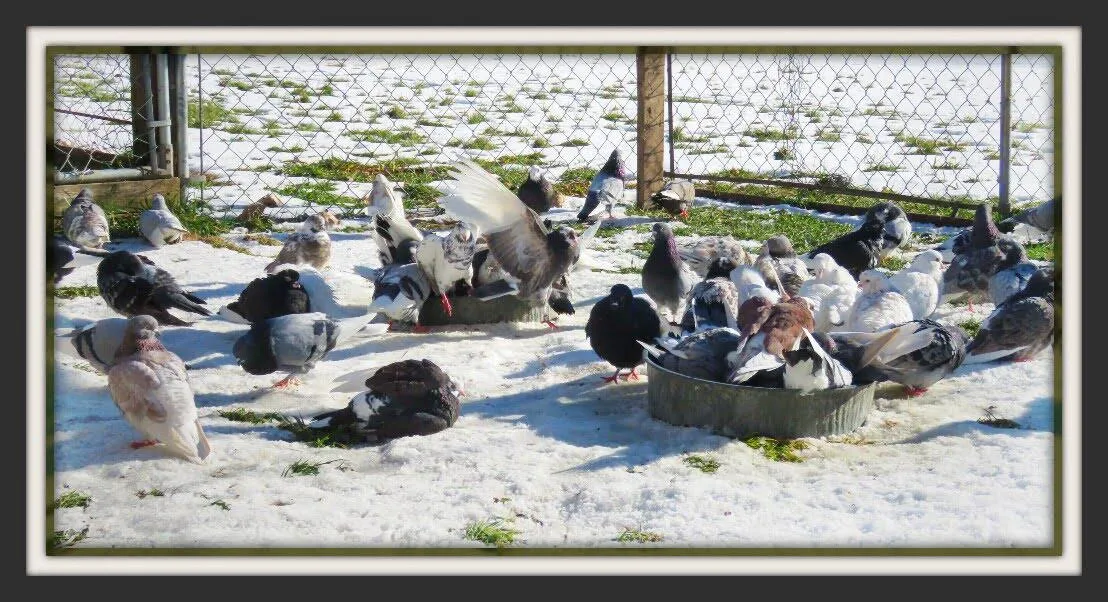
Never force a bird into bath water. Offer the opportunity and let the bird decide whether to enter.
Use bathing as an observation moment
While the birds bathe, notice the group and the individuals.
- Which birds enter normally and which hang back?
- Does a bird have trouble balancing or stepping into the pan?
- Is one bird repeatedly scratching or picking at the same feather area?
- Do the feathers look unusually rough, damaged, or soiled?
- Does a bird appear weak, distressed, or uninterested in normal activity?
One choice to skip a bath does not diagnose a problem. Look at appetite, drinking, posture, breathing, droppings, recent weather, molt, and the bird’s normal behavior. If a concerning change persists, keep the bird calm and contact an avian veterinarian.
Repeated scratching or restlessness may justify a careful inspection, but it does not prove mites. The consolidated bird-mite inspection guide explains what to check and why treatment should be based on correct identification and current product labels.
Keep bath water separate from drinking water
Bath water becomes dirty quickly. Birds step into it, preen in it, and may carry dust or droppings into the pan. That water should not become the group’s drinking supply.
Keep the drinking containers away from the bath area and inspect them after bathing. If the waterer has been splashed, contaminated, or tipped, clean it and replace the water.
The main clean drinking-water guide covers containers, daily checks, weather, and why plain usable water should remain easy to inspect.
Dump and clean the pan after the bath
Do not leave used bath water standing in or around the loft. Empty the pan where runoff will not create a muddy entrance, wet feed area, or standing-water problem. Wash the pan, let it dry, and store it so it stays clean between uses.
Check the floor, bedding, and corners after heavy bathing. A clean bird does not help much if the bath leaves a damp loft area behind. Our pigeon-loft cleaning routine explains how moisture checks fit into regular care.
Plain water is the safe baseline
Do not add medications, dewormers, pesticides, laundry products, or home mixtures to bath water because an old article or online comment suggested it. A product meant for a building, another species, or another route of use may not be appropriate for a pigeon bath.
If a bird has a suspected parasite, skin problem, wound, or illness, contact an avian veterinarian. Any product considered should be used only for the exact labeled purpose and according to qualified guidance. A bath should not become an unmeasured flock treatment.
Keep the routine simple
Offer a clean stable pan. Use plain water. Pick a suitable part of the day. Watch the birds. Keep bath water away from drinking water. Empty and clean the pan when they are finished.
That simple routine supports cleaner feathers and gives you useful time to observe the birds without making medical promises the bath cannot keep.
For shorter reminders on water, cleaning, and daily loft habits, visit Northland Rollers Quick Tips.
Until next time … enjoy the backyard fun.