
Bird mites are easy to miss when you only look at a pigeon from across the loft. They are small, they may spend part of their time in nest material or cracks, and the first thing you notice may be a change in the bird rather than a mite crawling in plain sight.
I have been fortunate that mites have not been a regular problem in our lofts. That does not mean I stop looking. Warm, humid weather, damp nest material, wild birds near a structure, and hard-to-clean hiding places are all good reasons to make inspection part of the normal loft routine.
The important point is this: scratching or restlessness does not prove a bird has mites. It tells you to slow down, inspect the birds and the loft, and get qualified help when the cause is not clear.
Quick answer: what to check first
Begin with behavior and feather condition. Then inspect the places where birds sit still and where debris or moisture can collect.
- Repeated scratching, picking, or preening that is unusual for that bird
- Restlessness or difficulty settling on a perch, especially when the loft is quiet
- Feathers that look rough or disturbed without an obvious reason
- Dirty or damp nest bowls and old nesting material
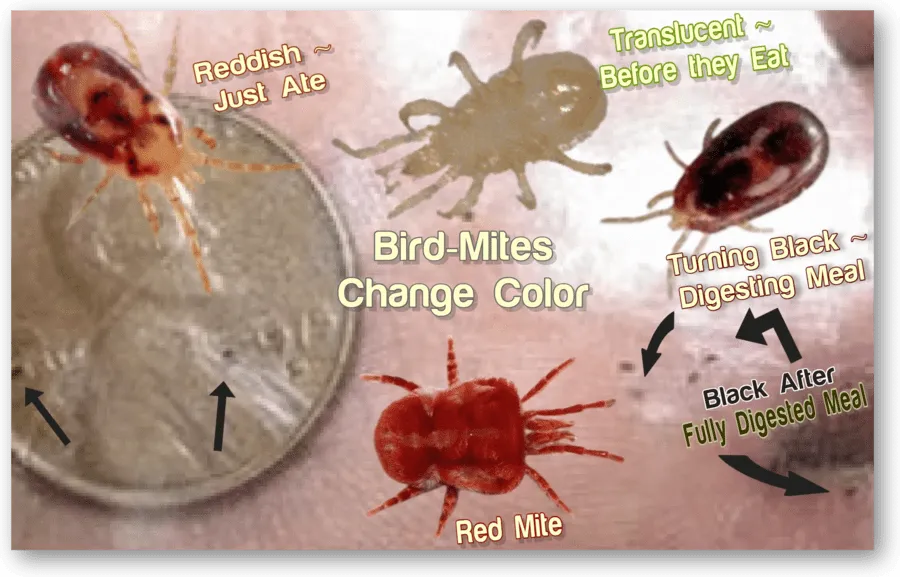
- Tiny moving specks around perch ends, wall seams, cracks, and nest-box corners
Those signs can have more than one cause. Do not jump from one observation to a treatment. Inspect carefully and look at the whole bird and the whole loft.
What bird mites are
“Bird mite” is a general name used for several small external parasites associated with birds and their nesting areas. Different species do not all behave exactly the same way, which is one reason correct identification matters.
Some mites spend much of their time on a bird. Others may hide in cracks, nest material, or nearby surfaces and come out to feed. A photograph or a speck seen from a distance is not enough to identify every problem correctly.
If you collect a sample for identification, avoid crushing it or mixing it with debris. An avian veterinarian or qualified pest professional can tell you what information or sample method will be useful.
Start with the birds’ behavior
A roller may look normal during a quick daytime pass and still act differently when it tries to rest. Watch the birds after the usual activity has settled down.
Is one bird moving its feet repeatedly on the perch? Is it picking at the same feather area? Is a bird that normally settles quietly staying restless? Are young birds in a nest unusually quiet or failing to respond as expected?
These are reasons for a closer look, not a diagnosis. Appetite, droppings, breathing, posture, recent bathing, molt, stress, and other health concerns can also affect behavior and feather condition.
Inspect the bird calmly
Handle the pigeon securely and with as little stress as possible. Part the feathers in good light and check areas that are easy to overlook, including under the wings, around the neck, and near the vent. Look at the feather bases and skin rather than only the outer flight feathers.
Do not keep handling a weak, distressed, or breathing-compromised bird just to finish an inspection. Place the bird in a calm, safe observation space and contact an avian veterinarian promptly.
If one bird appears affected, inspect the other birds and the shared environment too. A loft-level problem will not be solved by looking at only one pigeon.
Check the places mites may hide
Move from the bird to the structure. Use a flashlight and inspect:
- Perch ends and the seams behind perches
- Nest bowls, nest-box corners, and old nesting material
- Wall joints, cracks, trim, and loose panel edges
- Damp bedding or debris below the birds
- Places where wild birds have nested on or against the structure
Young birds cannot move away from an uncomfortable nest area, so nest bowls and surrounding material deserve frequent inspection. Remove soiled or damp material with care and clean the area as part of the normal loft routine.
Our main guide to cleaning a pigeon loft explains how regular scraping, moisture checks, and clear access to corners make changes easier to spot.
Do not guess at a pesticide or medication
A household insect spray, livestock product, poultry product, medication, or laundry product should never be applied to a pigeon, nest, bath, drinking water, feed area, or occupied loft just because somebody mentioned it online.
In the United States, pesticide use must follow the EPA-approved label. The label identifies where and how the product may be used, the organisms it is intended to control, required precautions, and whether animals must be removed. Using a pesticide in a way that conflicts with its label is not an acceptable shortcut. The EPA provides current information through its pesticide-label resources.
Label-first also means checking the exact current product, not relying on a color of can, an old name, a forum post, or a different formulation. Never apply a product directly to a pigeon unless the current label specifically allows that species and use and an avian veterinarian has advised that it fits the identified problem.
An avian veterinarian can help distinguish mites from other causes of scratching, skin irritation, poor feather condition, weakness, or behavior change. That qualified diagnosis should guide the next step. This page intentionally does not provide a home treatment recipe.
What you can do while getting qualified help
- Keep clean drinking water available.
- Keep the bird and loft area calm, dry, and easy to observe.
- Replace visibly soiled or damp disposable nest material.
- Avoid moving shared pans, tools, or loose material between sections until the situation is understood.
- Write down which birds and loft areas showed changes and when.
Do not delay veterinary help when a bird stops eating or drinking, becomes weak, has trouble breathing or balancing, or declines quickly. Young birds and already-stressed birds may have less room for delay.
Make inspection part of the care routine
Mite awareness works best when it is not a once-a-year panic. Look at nest bowls when you clean them. Check perch seams when you scrape. Watch feather condition during a plain-water bath. Notice which birds settle normally and which do not.
Regular bathing and feather observation, clean drinking water, and a dry, observable loft support good care. They do not guarantee mites will never appear, and they do not replace correct identification when something changes.
For shorter care reminders, visit Northland Rollers Quick Tips. If you need help deciding what information to gather before speaking with us or a veterinarian, use the Contact page.
The goal is not to be fearful of every itch or speck. The goal is to know the birds, inspect the loft, and respond safely instead of guessing.
Until next time … enjoy the backyard fun.